Imperial College London
Centre for Psychedelic Research
“Trial of Psilocybin versus Escitalopram for Depression”
Carhart-Harris RL, Giribaldi B, Watts R, et al.
New England Journal of Medicine · 2021
The science
I read these studies so you can see what they found. Every claim names its source, and I state the limits in plain English.
Written by Austin Mao. Last reviewed: October 2026
The three pillars
Three things shape an experience. Research has studied the first the most and the last the least.
Pillar 1, Pharmacology
Psilocybin binds 5-HT2A receptors in cortical neurons. Human fMRI shows changes in brain-network integration, and rodent studies show new dendritic spines. Whether these explain clinical benefit is still being studied.

Pillar 2, Set & setting
Mindset entering ceremony and the safety of the container shape the experience. Clinical trials standardize preparation, the room and the therapist relationship, though none has isolated their individual effects.

Pillar 3, Integration
Ceremonia's approach pairs ceremony with practice: IFS parts work, somatic regulation, journaling, community accountability. This is our practice, not a research finding. No trial has tested whether integration support lengthens benefits.
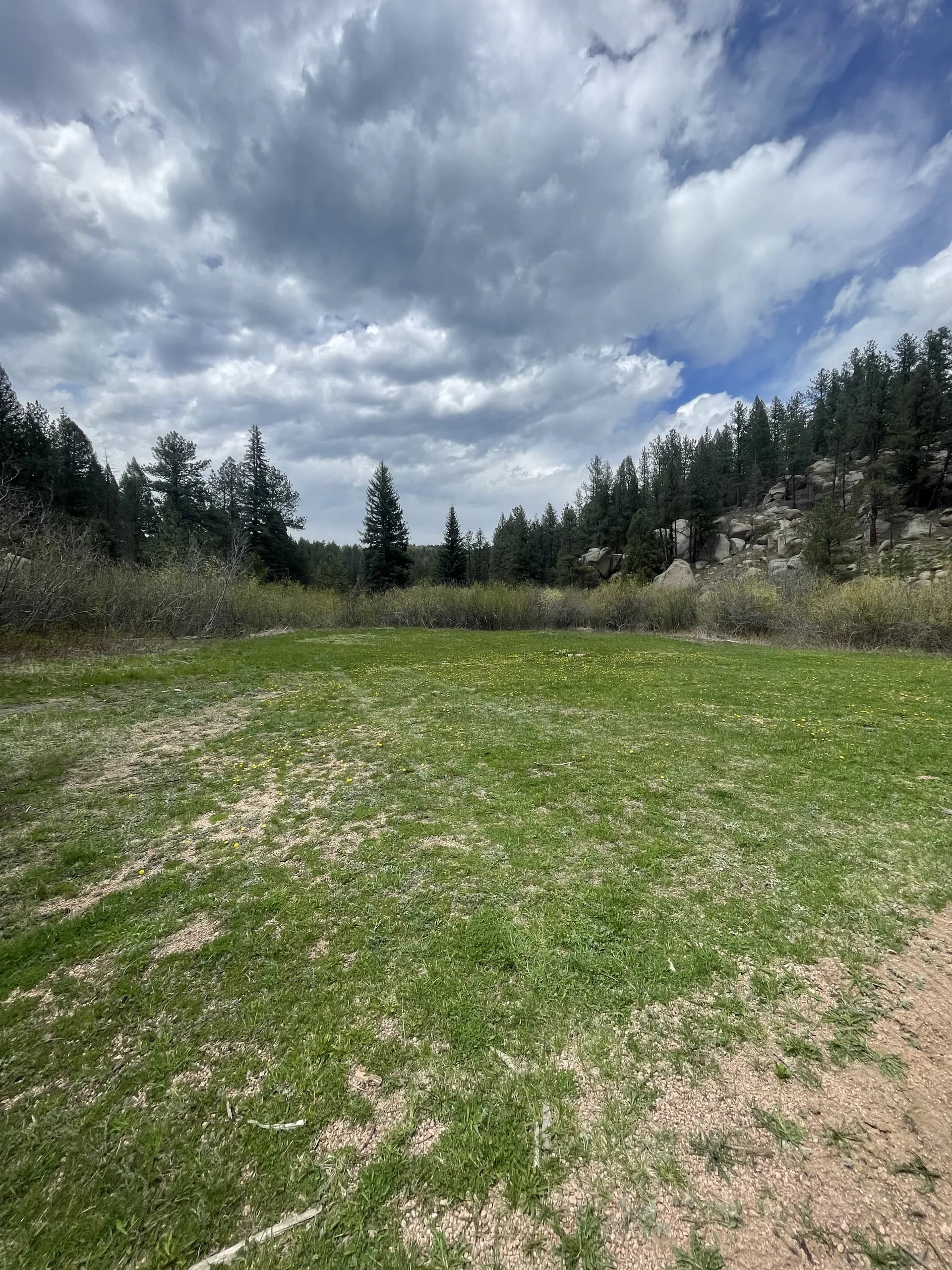
Our Colorado retreat center
The default mode network
The default mode network is a cluster of midline brain regions (medial prefrontal cortex, posterior cingulate, precuneus) that activates when you are not focused on a task. It is linked to the running inner monologue, autobiographical memory, and self-referential thought.
The DMN has been linked to rumination, though the pattern in depression is more complicated than simple overactivity. fMRI studies from Imperial College London reported reduced blood flow and reduced medial prefrontal–posterior cingulate coupling during the psilocybin state in 30 healthy volunteers (Carhart-Harris et al., PNAS 2012), and increased global integration with reduced modularity about three weeks later in patients with depression (Daws et al., Nature Medicine 2022). Whether these changes explain therapeutic benefit remains exploratory.
People in these studies often describe rumination softening and ego boundaries becoming porous during the acute effects, which last a few hours.
Neuroplasticity
Ly et al. (Cell Reports, 2018) reported that psychedelics increased neurite growth, dendritic spines and synapse number in cultured rodent neurons and in rodent cortex, dependent on 5-HT2A, TrkB and mTOR signaling. In mice, one psilocybin dose raised spine density and size by about 10% within 24 hours, and the change persisted at one month (Shao et al., Neuron 2021). These are rodent and cell-culture findings.
Researchers sometimes call this a “plasticity window,” but no study has measured one in humans. In mice, a social-reward-learning critical period stayed open at two weeks after psilocybin and had closed by three weeks (Nardou et al., Nature 2023). In patients, fMRI measured increased global brain integration about three weeks after treatment (Daws et al., Nature Medicine 2022). Human structural plasticity has not been measured directly.
These are indirect markers from small studies, so the practical reading is modest: the evidence does not show that a molecule installs change, and no trial has tested whether integration support lengthens benefits. Ceremonia treats integration as load-bearing, not aftercare, as a matter of its own practice rather than a research finding.

Our Colorado retreat center
Modality comparison
Same underlying pharmacology, partial 5-HT2A agonism, but the phenomenology, time course, and integration demand vary considerably. Choosing the right modality for a given person is its own discipline.
The most studied
DMT + harmala MAOIs
Brief, non-dual
How we cite
Each study on this page is named with its authors, year and journal. Click any citation to read the original paper. If a study is paywalled, the DOI is the permanent identifier; it will resolve at any institutional library you have access to.
We do not paraphrase results to make them friendlier. Where a figure comes from a company press release or a trial registry rather than a peer-reviewed paper, we label it as sponsor-reported. Where a mechanism comes from animal work, we say so.
How we read a study →The research
Three flagship trials. Public DOIs. Read them yourself.
Imperial College London
Centre for Psychedelic Research
“Trial of Psilocybin versus Escitalopram for Depression”
Carhart-Harris RL, Giribaldi B, Watts R, et al.
New England Journal of Medicine · 2021
Johns Hopkins Medicine
Center for Psychedelic & Consciousness Research
“Psilocybin produces substantial and sustained decreases in depression and anxiety in patients with life-threatening cancer”
Griffiths RR, Johnson MW, Carducci MA, et al.
Journal of Psychopharmacology · 2016
MAPS Public Benefit Corporation
Multidisciplinary Association for Psychedelic Studies
“MDMA-assisted therapy for severe PTSD: a randomised, double-blind, placebo-controlled phase 3 study”
Mitchell JM, Bogenschutz M, Lilienstein A, et al.
Nature Medicine · 2021
What's in trial
A snapshot of the late-stage trials moving toward regulatory review, last reviewed October 2026. Sourced from ClinicalTrials.gov and sponsor disclosures, so company figures are sponsor-reported rather than independently peer-reviewed. Verify current status before citing.
COMPASS Pathways
COMP360 (synthetic psilocybin, 25 mg)
Treatment-resistant depression
COMP005 complete; COMP006 active, not recruiting
Sponsor-reported: both trials met their primary endpoints (week-6 MADRS difference -3.6 in COMP005, -3.8 in COMP006; modest absolute differences). Rolling NDA under way, final submission expected Q4 2026. Not FDA-approved.
Resilient Pharmaceuticals (formerly Lykos Therapeutics)
MDMA-assisted therapy
Severe PTSD
Not approved
FDA issued a Complete Response Letter on 2024-08-09. A resubmission was reported in August 2026 by MAPS and trade press; FDA has not announced acceptance.
Usona Institute
Psilocybin
Major depressive disorder
Enrollment complete
NCT06308653: randomized, double-blind; results not yet public. Breakthrough Therapy designation (2019).
AtaiBeckley (Beckley Psytech)
BPL-003 (5-MeO-DMT)
Treatment-resistant depression
Phase 3 expected 2026
Randomized, double-blind, three-arm design; sponsor-reported MADRS reduction of 11.1 (12 mg) vs 5.8 (0.3 mg comparator) at day 29. Company-reported: Phase 3 (ReConnection-1/2) expected to start in 2026, with the 8 mg dose selected. Shown for education only; Ceremonia does not offer 5-MeO-DMT.
How it works
Default Mode Network softens
Human fMRI studies report reduced default-mode network integration during the acute effects, the network linked to self-referential thought and rumination.
Functional connectivity rises
In patients with depression, fMRI measured increased global brain integration about three weeks after psilocybin therapy (Daws et al., Nature Medicine 2022).
Spine growth in mice
In mice, one dose raised dendritic spine density about 10% within 24 hours, and it persisted at one month (Shao et al., Neuron 2021). This has not been measured directly in humans.
How long it lasts
A mouse critical period stayed open at two weeks and had closed by three (Nardou et al., Nature 2023). Human markers range from about three weeks to one month. No human plasticity window has been established.
Published research
MADRS point difference at week 6 in the two phase 3 trials of psilocybin for treatment-resistant depression. Modest absolute differences; not yet fully peer-reviewed.
MADRS points at week 3 for 25 mg vs 1 mg psilocybin in treatment-resistant depression (n=233). The 10 mg dose did not differ significantly from 1 mg.
No significant difference on the primary outcome (n=59) between two psilocybin doses and six weeks of escitalopram. Several secondary outcomes favored psilocybin but were not corrected for multiple comparisons.
Share of trial participants with neuropsychiatric disorders who had a serious adverse event, in a systematic review of 214 studies (114 with analyzable data, 3,504 participants). None were reported in healthy participants.
These are research findings from controlled settings; they do not describe outcomes at a retreat. Full citations: see the published studies above.
Frequently asked, briefly answered
In part. Controlled trials of psilocybin and MDMA-assisted therapy have reported positive results in specific clinical populations, while other findings are modest, mixed or still preliminary. No psychedelic product is FDA-approved yet. Three things to know when you read the evidence:
Peer-reviewed
The trials and papers cited on this page were published in peer-reviewed journals. Company press releases and trial-registry entries are labelled as sponsor-reported.
Mixed durability
Several imaging groups have reported acute changes in default-mode network integrity after psilocybin. Spine growth has been shown in rodents, and a plasticity "surge" in humans has not been established. How long benefits last varies across trials.
Not yet approved
FDA granted Breakthrough Therapy designation to COMPASS's psilocybin for treatment-resistant depression (2018) and to Usona's psilocybin for major depressive disorder (2019). That is a development-pathway status, not approval: no psilocybin or MDMA product is FDA-approved.
Frequently asked
Go deeper
The index lists each study with its DOI, who was studied, and what the trial did not show.
Pharmacology
The studies themselves: Johns Hopkins, Imperial College, and the COMPASS and Usona phase 3 programs, with DOIs and limits.
Neuroscience
A brain network linked to self-referential thought, and what imaging studies report after psilocybin.
Neuroscience
What was measured, in whom, and for how long: preclinical findings in mice and what human imaging has shown.
Pharmacology
What placebo-controlled, self-blinding and survey studies report, and the open safety questions. Education only.
Pharmacology
How DMT becomes orally active, and what the small clinical literature on ayahuasca has found.
Psychology
What trauma-informed means, the Window of Tolerance, what the trials found, and why screening comes first.
Framework
How we work: our practice, not a research finding. Read it on its own terms.
Begin
The studies can inform your decision. They cannot make it for you. A readiness check is a good place to start, and the masterclass shows how we work.